New Puppy Training: Calm 4-Week Routine for Beginners
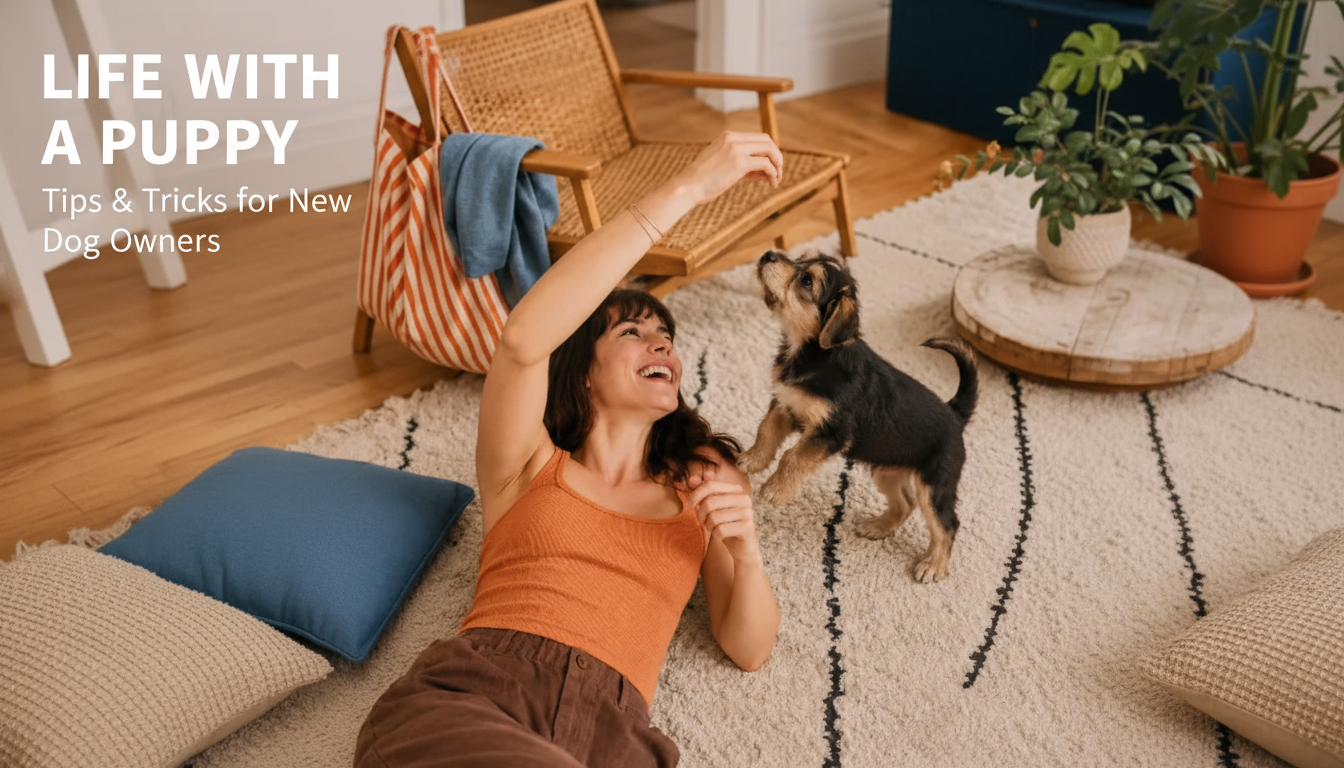
New Puppy Training Starter Guide: A Calm 4-Week Routine for House Training, Commands, and Socialization
A new puppy learns fastest when daily life is predictable: frequent potty breaks, short training sessions, plenty of rest, and gradual social exposure. The goal isn’t to “teach everything” in a month—it’s to build clear habits and confidence without overwhelm, so your puppy understands what earns rewards and what to do next.
Set Up Success Before Training Starts
A little preparation prevents most early problems (especially accidents, over-arousal, and confusion).
- Choose a confinement setup: a properly sized crate plus a small puppy-safe area for supervised play. Confinement isn’t punishment—it’s management that helps your puppy succeed.
- Pick a potty plan and stick to it: same door, same outdoor spot, same cue word, immediate reward. Consistency speeds up learning.
- Stock a few essentials: high-value soft treats, safe chew options, enzymatic cleaner, and a long line for outdoor practice.
- Create a simple daily rhythm: sleep, potty, play, train, eat, potty, rest—repeat. Most behavior improves when naps are scheduled.
- Decide on household rules now: furniture access, jumping greetings, and feeding locations should be the same for everyone in the home to avoid mixed signals.
If you want a ready-to-print version of this routine, see the New Puppy Training Starter Guide (printable 4-week routine).
The First 48 Hours: Bonding, Rest, and Predictable Potty Trips
The first couple of days are about safety and rhythm. A puppy that feels secure and well-rested learns faster and bites less.
- Prioritize sleep: overtired puppies get mouthy and struggle to settle. Plan frequent naps in a quiet space.
- Go out on a schedule: after waking, after eating/drinking, after play, and at least every 1–2 hours at first.
- Reward the exact moment potty happens outside: keep it calm and quick so it’s clear what earned the treat.
- Use supervision or confinement: if you can’t watch the puppy, the puppy goes to the crate or puppy-safe area.
- If an accident happens: interrupt gently (no scolding), take the puppy out, then clean thoroughly with enzymatic cleaner.
A Simple 4-Week Routine (Printable-Friendly)
Keep training light and frequent. Think “mini-sessions” that end while your puppy still wants more.
- Keep sessions short: 3–5 minutes, 2–5 times per day.
- Increase difficulty gradually: add one challenge at a time (duration, distance, or distraction).
- Use meals as training: hand-feed part of meals to reinforce attention and calm behavior.
- Track patterns: note potty timing, what triggers biting, and which distractions derail focus.
4-Week New Puppy Training Roadmap
| Week | Primary Goals | Daily Focus | Milestones to Look For |
|---|---|---|---|
| Week 1 | House-training routine, name response, calm handling | Potty schedule + reward, crate comfort, gentle collar/harness practice | Fewer indoor accidents; puppy turns to name; settles faster after play |
| Week 2 | Sit, touch/target, start leash basics | Short leash walks in low-distraction areas, reward check-ins, introduce “sit” for greetings | Sits with a lure; follows on leash briefly; accepts brief brushing/paw touch |
| Week 3 | Down, leave it foundation, polite play | Impulse control games (treat in hand), structured chew time, trade game for objects | Pauses before grabbing; releases items more easily; biting intensity decreases |
| Week 4 | Stay/wait beginnings, recall games, broader socialization | “Come” between two people, calm exposure to new sights/sounds, short field trips | Returns quickly in games; relaxes around mild distractions; confident in new places |
House-Training That Sticks: Timing, Rewards, and Management
House training is less about “teaching potty” and more about controlling timing and access until the habit is automatic.
- Start tight, then widen: keep the schedule strict at first, then slowly extend intervals as success becomes consistent.
- Leash potty trips: a short, businesslike trip makes the goal clear; play happens after potty, not before.
- Reward within 1–2 seconds: delayed rewards can accidentally reinforce sniffing, walking, or coming back inside instead of eliminating outdoors.
- Manage water thoughtfully: provide plenty, but consider limiting access right before bedtime after the last potty trip (with veterinarian guidance).
- Night plan: last potty right before sleep, then a quiet, boring nighttime potty trip if needed—no play, no excitement.
Beginner Commands That Make Daily Life Easier
These cues reduce chaos because they create predictable “default” behaviors—especially around doors, food, and greetings.
- Name response: say the name once, reward eye contact. Avoid repeating the name if the puppy ignores it—make it worth turning to you.
- Sit: lure up and back, reward immediately. Use it for doors, meals, and greetings to replace jumping.
- Down: lure from sit to the floor and reward when elbows hit. Keep it calm—no pushing or forcing.
- Come: start indoors as a fun game. Reward heavily and sometimes release back to play so “come” doesn’t always mean fun ends.
- Leave it (foundation): present a treat in a closed fist; reward from the other hand the moment the puppy disengages.
For step-by-step pages you can post near your crate area or kitchen, the New Puppy Training Starter Guide is designed for quick daily check-ins.
Socialization Without Overwhelming Your Puppy
Socialization is about forming positive associations—not greeting every person or dog. Aim for calm curiosity at a comfortable distance.
For evidence-based guidance, see the American Veterinary Society of Animal Behavior (AVSAB) position statement on puppy socialization and the American Kennel Club’s puppy training basics.
If your puppy will share a home with a cat, structured play and calm routines help everyone adapt—this printable Enrichment Ideas for Indoor Cats guide can support peaceful multi-pet households by keeping indoor cats appropriately occupied.
Common Roadblocks (and Quick Fixes)
Using a Printable Guide to Stay Consistent
FAQ
What is the first thing you should teach a new puppy?
Start with a reliable potty routine and a strong name response, since both improve daily communication immediately. Then add a simple sit to create calm moments for doors, meals, and greetings.








Leave a comment